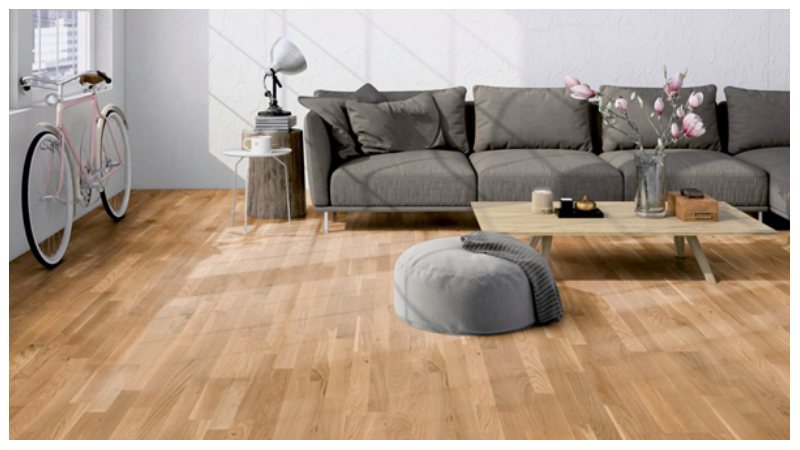
Globalisation forces have made interior design flat. Enter an office in Stockholm, a hotel lobby in Singapore, or a tech headquarters in San Francisco, and you are likely to be confronted with the same engineered quartz, the same rectified porcelain, the same neutral palette of greiges and off-whites. This homogenisation, which is powered by effective supply chains and Instagram algorithms, has given rise to a silent desire to be authentic in terms of materialism. And one of the most powerful counter-movements is the revival of oiled oak flooring–a material which is resistant to standardisation as such.
The oiled oak is the antithesis of the mass-market dominated oiled oak planks which have been plastified, ultra-matte, pre-finished. The oil finish is absorbed by the wood fibres, as opposed to being deposited on the surface, resulting in a bond that enables the timber to further breathe and respond to its environment. The sensual outcome is striking: the floor does not look like a fake simulation but rather like real wood. The surface still has a faint, satin lustre, which changes with use and develops a gentle patina over time. This reflects a deeper philosophy of home design living, where materials evolve alongside the spaces they inhabit. It marks a shift in the quality of living that globalised standard finishes often try to eliminate. A lacquered floor is meant to look the same on day one and on day one thousand; an oiled floor deepens in character, gaining an identity that becomes inseparable from the life lived upon it.
This reversion is based on a greater opposition to interior placelessness. Architects and house owners are demanding things that will pin-down a room to the world of tactile reality and to a culture of craft. Oak, particularly in a natural or lightly white-oiled finish, possesses the organic tumult of the grain, the marks of the growth of a particular species of tree. There are no two boards the same. When applied over an open and uninterrupted living space, the floor does not scream to the eye but rather offers a relaxed and diverse terrain, which is not obsessive. It offers an impartial grounding that is, ironically, abundant with life.
The transition is also pragmatic. An oiled floor is amazingly repairable. A scratch or scuff–inevitable in an active family house-can be treated locally by a fresh coat of oil, which will blend perfectly with the existing surface. One does not have to sand and refinish a complete room. This localised maintenance has positioned it as a sustainable luxury, prolonging the useful life of the floor, and minimising waste of materials. It is suitable to the demand of the moment of durability but not deadness.
In this expanding niche, the skilled professionals, such as wfa.com, offer oiled oak flooring where the quality of the material itself speaks louder and louder than any applied pattern. It is not a trend; it is a kind of reclamation of a touchable, imperfect, and humanely human ground in an ever-more generic world. The floor beneath you turns into a mute manifesto: this is not a place that you can switch with.