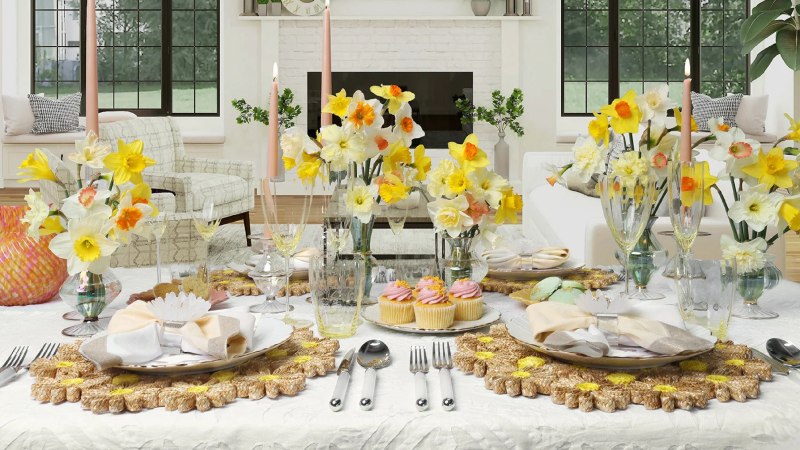
The right vase makes arranging flowers easier. It supports the stems, suits the surface, and gives the room a finished detail without demanding attention all the time. Glass is especially versatile because it works with bright flowers, quiet branches, dried materials, and changing seasonal colours.
Instead of choosing a vase only because it looks attractive in a photograph, start with how you expect to use it. The most useful piece is usually one that can move between rooms and adapt to more than one kind of arrangement.
Match the shape to the stems
Tall stems and branches need a vessel with enough height to support them. Short flowers may look better in a low bowl or compact vase. A narrow opening helps keep a small group together, while a wider opening gives fuller arrangements room to spread. When the opening is much wider than the bouquet, the flowers can look sparse; when it is too narrow, the stems can appear crowded.
If you regularly buy mixed bouquets, a medium-sized vase with a practical opening is often the most flexible option. If you cut flowers from a garden, several smaller vessels may be more useful than one large container because they let you separate delicate stems and create displays in different rooms.
Think about the surface and the view
A dining table needs space for plates, serving dishes, and conversation. A low arrangement is often the safest choice, particularly when guests will sit on both sides. A console or entryway can take more height because the vase is viewed from a greater distance and can balance a mirror, artwork, or lamp.
On a kitchen counter or breakfast table, a smaller vase brings in colour without making the surface difficult to use. On a sideboard, a larger vessel can form part of a layered display with books, a tray, or a bowl. Always check that the base is stable and that the piece is not likely to be caught by sleeves, bags, or passing traffic.
Let clear glass connect the room with the season
Clear glass keeps the stems visible, which makes a simple arrangement feel natural and unforced. Fresh flowers can bring spring and summer colour indoors, while branches, dried grasses, seed heads, and evergreen cuttings keep the display interesting during colder months.
A small collection is often more useful than a single statement piece. Comparing glass vases for everyday styling can help you think about height, opening, and silhouette as a group. A tall cylinder, a rounded vessel, and a smaller bud vase each serve a different purpose while still working together.
Create coordination without making everything identical
A coordinated collection does not require every piece to match exactly. It is enough for the vases to share a material, finish, or colour family while their shapes vary slightly. This gives the room a repeated visual language without making the display feel like a catalogue set.
The same collection can be restyled through the year. Keep the vessels familiar and change the flowers, branches, or small table accents. This makes seasonal decorating simpler and helps each vase earn its storage space.
Simple care keeps the glass looking intentional
Remove leaves below the water line, rinse the inside regularly, and wipe the outside before placing the vase on a visible surface. A clear vessel shows fingerprints and cloudy water quickly, but it is also easy to refresh with a soft cloth and clean water.
If the vase will be used for an event, prepare one sample arrangement first. Test the height from a seated position, confirm that the flowers have enough support, and check how much space remains for plates or other table details. A short test prevents last-minute changes across a whole room.
Choose pieces that can keep working
Good floral styling is not about finding perfect flowers. It is about giving ordinary stems the right support and placing them where people can enjoy them. Choose glass vases that suit the flowers you buy, the surfaces you use, and the amount of arranging you want to do. A flexible shape will keep contributing long after one bouquet has faded.